
Organised by SHC


Singapore Hepatology Conference 2026
ONLINE over 4 evenings
For the Busy Clinician
31 August to 3 September 2026
6.30pm to 10.30pm
Singapore Hepatology Conference 2026
Register for Online Meeting
You need to first Register for Singapore Hepatology Conference
Register Now
Singapore Hepatology Conference 2026 Scientific Programme
Speakers names will be added soon.
August, 2026
31
| Programme | Time (SGT) |
|---|---|
| Chronic Hepatitis B And D | |
| Chairs | |
| Opening comments and introduction | 06.30 pm to 06.45 pm |
| CHB Grey zone: clinical significance | 06.45 pm to 07.10 pm |
| Landscape of Hepatitis B cure in 2026 | 07.10 pm to 07.35 pm |
| Gene therapy for CHB | 07.35 pm to 08.00 pm |
| Q&A | 08.00 pm to 08.30 pm |
| Break | 08.30 pm to 08.45 pm |
| Immune suppression and HBV | 08.45 pm to 09.10 pm |
| Management of severe hepatitis B Flares | 09.10 pm to 09.35 pm |
| Delta Hepatitis Update | 09.35 pm to 10.00 pm |
| Q&A | 10.00 pm to 10.30 pm |
| Close | 10.30 pm |
September, 2026
1
| Programme | Time (SGT) |
|---|---|
| MASLD & MASH | |
| Opening comments and Introduction | 06.30pm to 06.45pm |
| Phenotype-genotype interactions in MASLD: A south east asian perspective | 06.45pm to 07.10pm |
| Screening for MASLD in the community: are our protocols ready? | 07.10pm to 07.35pm |
| Q&A | 07.35pm to 08.00pm |
| Break | 08.00pm to 08.20pm |
| Debate: MASLD and MASH has lost its relevance – we should only be screening for fibrosis (con) | 08.20pm to 08.40pm |
| Debate: MASLD and MASH has lost its relevance – we should only be screening for fibrosis (pro) | 08.40pm to 09.00pm |
| Q&A | 09.00pm to 09.20pm |
| Extra-hepatic caridometabolic consequences in MASLD: when to screen | 09.20pm to 09.45pm |
| A practical approach to treatment of MASH | 09.45pm to 10.10pm |
| Q&A | 10.10pm to 10.30pm |
September, 2026
2
| Programme | Time (SGT) |
|---|---|
| Hepatocellular carcinoma (HCC) | |
| Opening comments and Introduction | 06.30 pm to 06.45 pm |
| Prevention and surveillance for hepatocellular carcinoma in chronic hepatitis B | 06.45 pm to 07.10 pm |
| MASLD-related HCC: risk prediction, surveillance, and prevention | 07.10 pm to 07.35 pm |
| Precision medicine for HCC | 07.35 pm to 08.00 pm |
| Q&A | 08.00 pm to 08.20 pm |
| Locoregional and systemic therapy in intermediate HCC | 08.20 pm to 08.45 pm |
| Updates in systemic therapy for HCC | 08.45 pm to 09.10 pm |
| Conversion therapy for initially unresectable HCC | 09.10 pm to 09.35 pm |
| Q&A | 09.35 pm to 10.00 pm |
September, 2026
3
| Programme | Time (SGT) |
|---|---|
| Advanced Liver Diseases | |
| Opening comments and Introduction | 06.30 pm to 06.45 pm |
| “Alcohol-Related Liver Disease in 2026: a holistic, personalised approach —linking AUD treatment, risk stratification, and emerging therapies” |
06.45 pm to 07.10 pm |
| “MetALD and the new SLD nomenclature: operationalising alcohol quantification, classification, and clinical decision-making” |
07.10 pm to 07.35 pm |
| “ALD and liver transplantation: from early LT for severe AAH to long-term outcomes—what systems must change” |
07.35 pm to 08.00 pm |
| Q & A Session | 08.00 pm to 08.30 pm |
| Break | 08.30 pm to 08.45 pm |
| “Alcohol-related liver disease and transplantation in the Asia-Pacific: practical lessons from an Australian national transplant programme” |
08.45 pm to 09.10 pm |
| “MetALD in Singapore: building a clinic pathway—non-invasive risk stratification, multidisciplinary care, and when to escalate” |
09.10 pm to 09.35 pm |
| “Treating Alcohol Use Disorder as core liver care: pharmacotherapy,relapse prevention, and shared-care models between hepatology and addiction services” |
09.35 pm to 10.00 pm |
| Q & A Session | 10.00 pm to 10.30 pm |
| Close | 10.30 pm |
Who Should Attend?
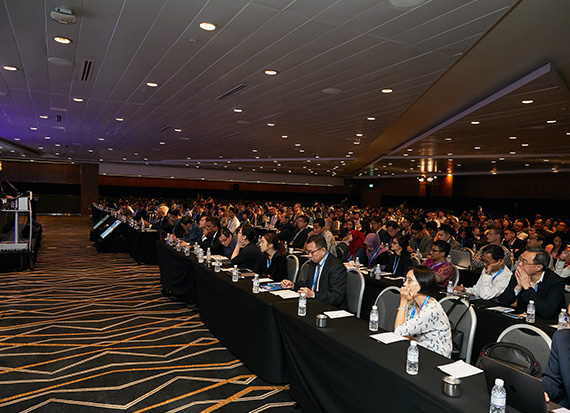
The Singapore Hepatology Conference programme is designed for busy clinicians, basic and translational researchers, nurse practitioners, pharmacists, from Asia, the Indian Sub-continent, Australia and New Zealand, to exchange information on the latest research, discuss new developments in liver treatment and transplantation, and network with leading experts in the field of hepatology.
Our Attendees Include:
- Hepatology experts.
- Clinical, basic, and translational researchers.
- Specialists who diagnose and treat liver disease, including gastroenterologists, surgeons, clinical pathologists, anesthesiologists, and radiologists.
- Primary care physicians.
- Nurse practitioners, registered nurses, physician assistants, pharmacists, and other allied health professionals in hepatology and the disciplines listed above.
- Trainees, and students in the disciplines listed above.